
Back to Battery Retains Critical Raw Materials Within the EU by Extracting Them from Discarded Batteries
16-09-2026
Batteries are becoming increasingly important for the energy transition. To reduce dependency on China, the EU is urging countries to recycle more batteries and reuse raw materials. The Dutch company Back to Battery specializes in this area. "We are still small, but we want to become a major player in this field," says CEO and co-founder Steven Lans.
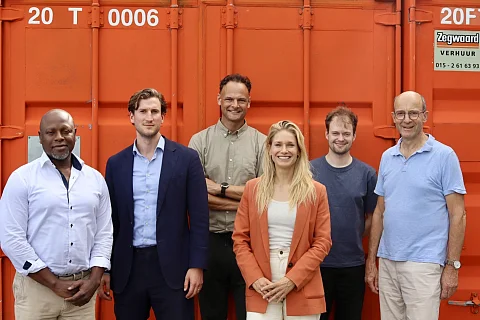
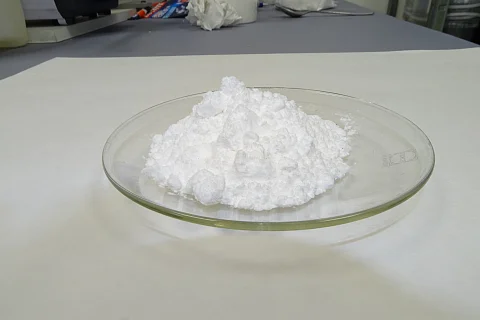
In two or three years, Lans aims to have a demo factory operational that recycles critical raw materials for batteries on a larger scale from what is known as black mass. This black powder is the residue left after discarded lithium-ion batteries are shredded.
The company can process any type of black mass from any lithium-ion battery using a specialized hydrometallurgical process. This includes materials from phones, other electronic devices, bicycles, or cars. ‘We are very flexible. Our solvent can handle everything and extract raw materials from all existing battery chemical types,’ says Lans.
95 percent of metals recovered
During shredding, copper and aluminum are first separated. The black powder primarily contains lithium, cobalt, nickel, and graphite—all materials that the EU categorizes as ‘critical’ due to their strategic importance.
‘From that black mass, we can recover 95 percent. This distinguishes us from competitors. These metals are reusable, without loss of functionality. They do not degrade or break down,’ Lans explains. The goal is to resell these raw materials back to the battery industry.
Back to Battery started in 2024 at the Brightlands Chemelot Campus in Limburg. Initially, the startup focused on recycling old batteries from smartphones and processing them into new raw materials. Two years later, the scope has broadened significantly, and the startup is thinking bigger. Lans says, ‘We have processed different black masses from various shredders in Europe in our pilot. We have learned a lot from that.’
The market for discarded batteries is booming
The market for recovering raw materials is set to explode in the coming years. The waste pile of batteries is growing faster each year. Thousands of electric cars, bicycles, and millions of electronic devices are being discarded.
Just the discarded electronic devices in Dutch households alone contain over 7 billion kilograms of valuable raw materials. Among these, 764 million kilograms fall under strategic and critical raw materials, as calculated by Stichting OPEN.
‘We are only at the beginning of all those batteries ending up in the waste pile. Right now, we are still small, but we want to become a significant player in this market. We are already doing that with our expertise,’ says Lans.
Car manufacturers that produce or source the batteries for their electric cars could become an important market for the company in the future. Notably, Back to Battery has been invited to a panel by Toyota. Recently, Lans also had a phone conversation with BMW.
‘Those car brands are already knocking on our door,’ he says. ‘Initially, we said: as a startup, we won’t approach the big companies since we wouldn’t have any negotiating power. But they are managing to find us anyway. We won’t say ‘no,’ even if it’s just talking for now.’
Stricter EU regulations beneficial for the company
The company stands to benefit from the stricter regulations imposed by the EU regarding battery recycling and the export of raw materials. For instance, the European battery regulation mandates that battery producers take back batteries after use.
Starting in 2027, 63 percent of portable batteries must be collected, increasing to 73 percent by 2030. By the end of 2028, the collection rate for bicycle batteries must already reach 51 percent. Next year, 50 percent of lithium from batteries must be recovered. For cobalt, copper, lead, and nickel, that figure is 90 percent.
This recovery is precisely what Back to Battery does. It is particularly important for the startup that producers are required to use the recycled materials. From 2031, various requirements will apply: 16 percent for cobalt, 6 percent for lithium, and 6 percent for nickel.
Currently, the EU is set to ban the export of black mass to non-OECD countries such as China starting in November. ‘The shredders will no longer be able to export and are increasingly seeking local buyers. They are not there yet. That is what we offer,’ says Lans. ‘This other legislation also helps us tremendously. It impacts the entire chain.’
Pilot factory reduced in size out of necessity
But is the company prepared for that larger demand? In 2024, Back to Battery had the ambition to build a demo factory within a year that would produce 500 kilos of raw materials per week. That turned out to be too ambitious. ‘The pilot factory has become significantly smaller,’ Lans admits. This was primarily due to the complicated and lengthy permitting process for processing waste (black mass is considered waste and not yet a raw material) at the Brightlands Campus.
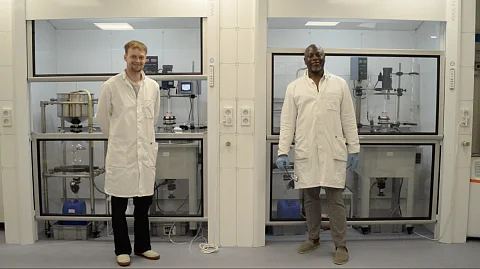
‘We couldn’t wait for that, so we decided to go smaller, the maximum size you can go without a permit. We are now talking about a scale of kilograms. This allowed us to start much faster and cheaper while still producing products for customers. We are now making small batches of lithium, graphite, cobalt, nickel, and manganese. We will sell these in the future, but the current quantities are samples that we give away in exchange for feedback,’ he explains.
€ 11 million needed for a larger factory
Currently, the startup is looking for a new location to build a larger pilot factory. In a year, Back to Battery aims to make a definitive investment decision regarding the construction of that factory, which is expected to require an investment of 11 million euros.
The factory should be operational by the last quarter of 2028 or the first quarter of 2029. Two-thirds of all incoming black mass that shredders need to supply is already secured. ‘And we have only just begun. That factory will be filled,’ states Lans.
Since its inception, the startup has primarily relied on subsidies, such as those from the National Growth Fund, supplemented by other funding and grants. ‘We have come a long way with relatively little money. I am proud of that, and we communicate this to investors: your money is well spent here,’ he asserts.
Going to market with help from Green Chemistry Accelerator
Back to Battery is one of the participants in the Green Chemistry Accelerator (GCA) this year, part of the Green Chemistry New Economy (GCNE) platform. This program, created in collaboration with Invest-NL and the Regional Development Agencies (ROMs), aims to assist startups and scale-ups in scaling up their innovations, seeking investors, and building demo factories. This eliminates barriers and allows them to reach the market sooner.
During GCA, each participant works with experts and partners on a concrete plan for about 200 days. This involves assessing the main objectives to achieve, whether there is demand and customers for the product, and whether the business case is viable. This is essential for attracting investors.
According to Lans, the program is extremely valuable for startups. ‘It is an eye-opener that provides you with insights into the steps you need to follow. The program came at the right time for us, as we were just starting to make all these products, and customer contact was becoming increasingly important,’ says Lans.
To assist with this task, Back to Battery hired Matthijs Damm as commercial director on March 1. He has brought more structure to the approach toward customers and the market. ‘We now need to sell what we don’t yet have,’ Lans describes Damm's role.
Additionally, the informal contacts with other participating startups have been valuable for him. ‘You feel a connection with each other. Some have been further along for two years, others have just started. You share a lot of experiences. At the bar, you don’t only hear the success stories you hear in the presentations.’
This article is a repost from change.inc